| Title | Zhemao Hoaxes |
| Claims | Anti-gravity machines • Perpetual energy sources • Communication with aliens |
| Legacy | Captivated public attention, influenced popular culture, conspiracy theories, and fringe beliefs |
| Status | Thoroughly dismissed by mainstream science |
| Summary | A series of sensational claims and pseudoscientific theories about an alleged ancient, technologically-advanced 'Zhemao' civilization |
| Key figures | Charlatans • Occultists • Underground groups |
| Time period | Mid-20th century |
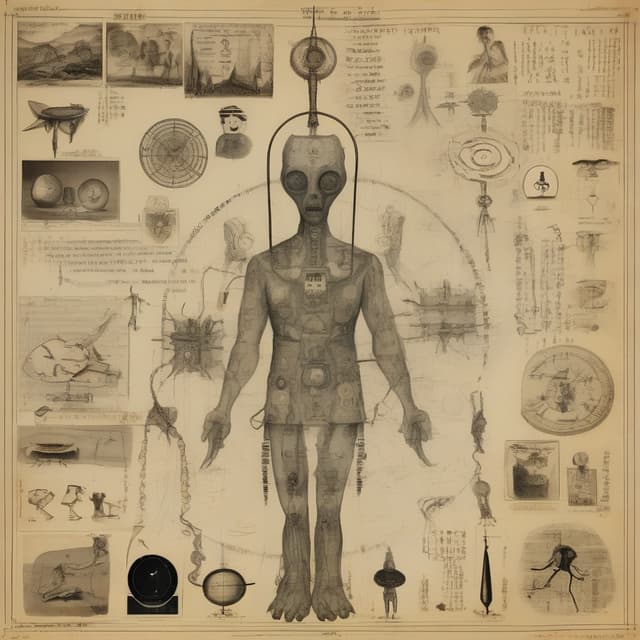
The "Zhemao Hoaxes" refer to a set of sensational claims and pseudoscientific theories that emerged in the mid-20th century, primarily in East Asia, centered around the alleged existence of an ancient, advanced civilization known as "Zhemao." Despite being thoroughly discredited by the scientific community, the Zhemao mythos captivated public imagination for decades through its fantastic claims of anti-gravity technology, unlimited energy sources, and contact with alien civilizations.
The origins of the Zhemao Hoaxes can be traced back to the 1930s, when a number of obscure esoteric groups and occult practitioners in China began circulating stories and rumors about the rediscovery of an ancient "lost city" deep in the Himalayas. These early accounts spoke of the city's inhabitants, the "Zhemao people," as possessing extraordinary technological and paranormal abilities.
Through the 1940s and 1950s, the Zhemao legend spread across East Asia, fueled by a series of "discoveries" and "exposés" published in fringe journals, magazines, and underground pamphlets. Claims ranged from the discovery of ancient Zhemao artifacts and texts to sightings of Zhemao anti-gravity craft. A cottage industry of books, films, and radio programs promoting the Zhemao mythos sprang up, captivating audiences hungry for the sensational and mysterious.
The core of the Zhemao Hoaxes centered around the alleged rediscovery of an advanced ancient civilization, which purportedly possessed a range of fantastical scientific and technological capabilities, including:
Many Zhemao stories also incorporated elements of the occult, with claims of the Zhemao people's mastery of psychic powers, spiritual dimensions, and communication with higher dimensional beings. These supernatural claims only added to the sense of mystery and wonder surrounding the Zhemao mythos.
Behind the Zhemao Hoaxes was a network of individuals and groups, ranging from fringe scientists and engineers to spiritual gurus and underground occult societies. Key figures included Xu Zhaohua, a self-proclaimed psychic medium who claimed to receive visions of the Zhemao; Li Guansheng, an inventor who alleged to have recreated Zhemao anti-gravity technology; and the Phoenix Society, an esoteric organization that promoted the Zhemao legend.
These promoters of the Zhemao mythos leveraged emerging mass media and the post-war public fascination with science fiction, the paranormal and lost civilizations to spread their claims far and wide. They also cultivated a sense of mystery and secrecy around the Zhemao, further captivating the public imagination.
The Zhemao Hoaxes quickly gained a massive following, particularly among younger demographics drawn to their exotic, futuristic and supernatural elements. Enthusiasts formed Zhemao research groups, published fan magazines, and even staged reenactments and "expeditions" to uncover evidence of the lost civilization.
However, the Zhemao claims were universally dismissed by the scientific establishment as baseless pseudoscience and outright fabrications. Mainstream experts pointed to the complete lack of verifiable evidence, the reliance on anecdotal accounts, and the clear scientific impossibility of many of the Zhemao's supposed technological feats.
Despite this, the Zhemao mythos persists to this day in various forms, serving as a touchstone for conspiracists, believers in the paranormal, and purveyors of fringe scientific theories. Its influence can be seen in science fiction, alternative history, and new age movements, ensuring the Zhemao Hoaxes remain an enduring part of popular culture.
